
mercredi 29 mars 2017

mardi 28 mars 2017
Être Poète
Être poète, ce n'est pas seulement écrire des poèmes. C'est une manière de vivre, une façon particulière de traverser le monde : l'œil et l'esprit ouvert, curieux de tout.
Le poète est un étonné perpétuel, passionné du nouveau, de l'étrange, de l'autre, de tout ce qui lui enseigne que dans ce qu'il voit, entend, fait chaque jour, il y a mille secrets cachés, un inconnu qu'il ne finira jamais d'explorer.
Qu'il y a un autre monde dans le monde, tout aussi vrai que le premier mais plus vaste…
Jean-Pierre SIMEON
[transmis par Sylvie Mann-Moulédous : merci]
Tableau : Abe TOSHIYUKI
Le poète est un étonné perpétuel, passionné du nouveau, de l'étrange, de l'autre, de tout ce qui lui enseigne que dans ce qu'il voit, entend, fait chaque jour, il y a mille secrets cachés, un inconnu qu'il ne finira jamais d'explorer.
Qu'il y a un autre monde dans le monde, tout aussi vrai que le premier mais plus vaste…
Jean-Pierre SIMEON
[transmis par Sylvie Mann-Moulédous : merci]
Tableau : Abe TOSHIYUKI


lundi 27 mars 2017

1947-2017

Et mon petit frère a 70 ans
Bon anniversaire Michel
Que l'année nouvelle
Te garde toutes les dents !
Ne plus habiter la Terre
Certes, il est étrange de ne plus habiter la terre,
ne plus avoir à se servir de gestes à peine appris,
aux roses et à tant d'autres choses si pleines de promesses
ne plus accorder le sens d'un avenir humain ;
n'être plus ce qu'on a été entre des mains infiniment fragiles
et abandonner jusqu'à son nom comme un jouet cassé.
Étrange de ne plus désirer que le désir dure. Étrange
de voir flotter sans lien dans l'espace
tout ce qui jadis fut lié.
Être mort est laborieux
et plein de reprises jusqu'à ce que peu à peu on devine
un peu d'éternité…
Rainer Maria RILKE - Élégie de Duino
Tableau : Yoel Tordjman Artist - Cosmic
ne plus avoir à se servir de gestes à peine appris,
aux roses et à tant d'autres choses si pleines de promesses
ne plus accorder le sens d'un avenir humain ;
n'être plus ce qu'on a été entre des mains infiniment fragiles
et abandonner jusqu'à son nom comme un jouet cassé.
Étrange de ne plus désirer que le désir dure. Étrange
de voir flotter sans lien dans l'espace
tout ce qui jadis fut lié.
Être mort est laborieux
et plein de reprises jusqu'à ce que peu à peu on devine
un peu d'éternité…
Rainer Maria RILKE - Élégie de Duino
Tableau : Yoel Tordjman Artist - Cosmic
posté par Maela

L'ëtre éveillé
Une personne qui ne marche plus au son des tambours de la société, et qui danse sur la musique qui jaillit d'elle-même, voilà une excellente définition de l'être éveillé...
Anthony de MELLO
Anthony de MELLO
Posté par Maela


La poésie
La poésie se fait dans un lit comme l'amour.
Ses draps défaits sont l'aurore des choses...
André BRETON
Ses draps défaits sont l'aurore des choses...
André BRETON


dimanche 26 mars 2017


samedi 25 mars 2017


Du pur Maéla
Rien n'est joué. Mais tout est consommé : le chagrin, la désespérance qui ravine le cœur et jusqu'à l'angoisse qui mord la gorge.
Tout est pardonné : les humiliations répétées, les infidélités, les paroles perfides, les dérobades et les trahisons.
Tout est consolé : la solitude, l'abandon, l'exil.
[...]
Là où les choses ne peuvent plus se dire mais se ressentir, on n’a plus qu’à resserrer son existence au-dedans de soi…
Maela Paul - La Petite Colère, L'Harmattan, 2010
Tout est pardonné : les humiliations répétées, les infidélités, les paroles perfides, les dérobades et les trahisons.
Tout est consolé : la solitude, l'abandon, l'exil.
[...]
Là où les choses ne peuvent plus se dire mais se ressentir, on n’a plus qu’à resserrer son existence au-dedans de soi…
Maela Paul - La Petite Colère, L'Harmattan, 2010


Australie , Sydney maybe !
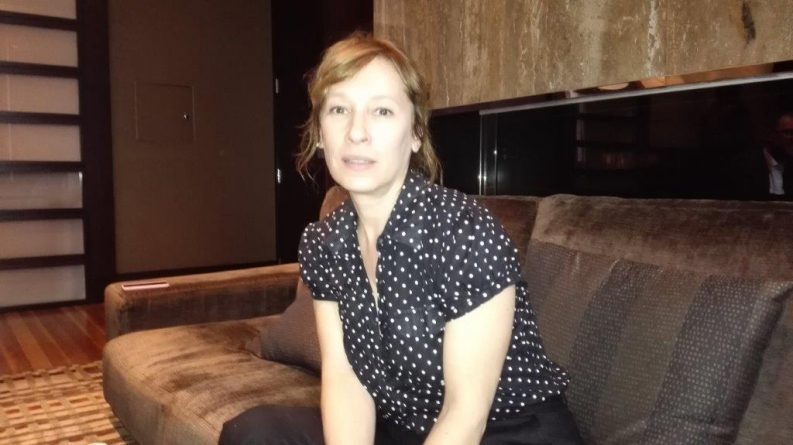
Emmanuelle Bercot: Flying the Flag for French Cinema
March 17, 2017
Director Emmanuelle Bercot was recently in Australia to promote her two films playing at the Alliance Francais French Film Festival.
“It’s not a current topic in France. There are no quotas. Yes, in a lot of countries it’s hard for women to find their position in society and the film industry. But in France there are more and more women becoming directors. Because women started later to make film there is still an imbalance. But there are a lot more women directors today. It’s not really as big a fight in France as in other countries.”
That’s Emmanuelle Bercot, in Australia for only three days all the way from France, to promote her two films – Standing Tall and 150 Milligrams – that are playing at the popular Alliance Francais French Film Festival.
Touring 40+ films across Australia and New Zealand, almost half of this year’s program is made up of films made by female filmmakers.
The two films from Bercot represent the past 6 years of the filmmaker’s life, which started with On My Way, which played at a previous Alliance Francais French Film Festival. It also starts and ends with French icon Catherine Deneuve.
Deneuve starred in On My Way, features in a prominent supporting role in Standing Tall and suggested the lead actress in 150 Milligrams.
“She’s known in France for the TV show Borgen,” says Bercot about Danish actress Sidse Babett Knudsen, who is phenomenally human in the film. “I cast her because I couldn’t project a French actress in this character. None inspired me and I was about to pull out of the film but then Catherine Deneuve told me to have a look at this actress. She thought it was the woman I was looking for. And she’d heard that she spoke good French. I watched Borgen and thought she was amazing.”

SIDSE BABETT KNUDSEN IN 150 MILLIGRAMS
150 Milligrams is based on the true story of a doctor in Brest in Brittany identifying a connection between heart damage in her patients and a drug that has been prescribed to them for diabetes and obesity. Cue big battle with pharma in a story that is not often seen from French cinema.
“It’s true that the US are the best at making this kind of film – one against the system,” admits Bercot. “I didn’t copy them but I did watch what they do as a model.”
Standing Tall also hinged on finding the right person to portray its central part of a teenage delinquent who must go through France’s juvenile judicial system.
“He was found at a TAFE and was learning to be a carpenter,” Bercot says of the impressive Rod Paradot, who appears in virtually every scene in the film. “He had never been in front of a camera. He was very far from the character as written. I hesitated a lot in choosing him. I liked his look. It was really hard work to get him to do what he does in the film because he’s a very nice guy, very polite, he’s not at all the character.
“In each of my films I have worked with teenagers. I usually choose them because they’re close to the character. But this was different. He wasn’t an actor, so I had to teach him how to act. He was like a puppet. It was very special in that sense. The way his body moved is something that actors work on themselves but here I had to really mould him.”

ROD PARADOT AND BENOIT MAGIMEL IN STANDING TALL
The way her characters move through the world is something that is quite evident in both of Bercot’s films, adding a complex layer to the drama. “I have always been very obsessed with the physicality of the actors,” she admits. “I would never tell them how to psychologically work on the character, but I always help them with the body and physicality.”
Her interest in acting actually harks back to her beginnings, and it culminated when she won the Best Actress Award at Cannes for her heartbreaking performance in Mon Roi.
“At the beginning I wanted to be an actress, but more in the theatre,” she tells us. “I was interested by the theatre scene, but it was hard to get a job. I had to do lots of little jobs to pay the bills. I ended up being worried and scared about not having a job. So I entered La Femis, which is a big French film school, and passed the exam, which changed my life completely. Now I had a job and I never stopped working as a director. Besides that, I still like acting, but it was a succession of things. I became a director by accident. I never imagined I would be who I am today.
“I acted in my first film [2001’s Clement] but I never want to do it again,” she continues when we ask her why she does not perform in her own films. “It takes a lot of energy to do both jobs. But I love working with actors to discover them and the characters. I don’t take advantage of the position as it’s not beneficial.”
As the interview winds up, we ask Bercot whether the final shot of Standing Tall,featuring the French flag flying outside a courthouse was a deliberate choice for this filmmaker whose two films we are discussing here both deal with social issues affecting the rarely represented strata of French society? “That’s very important to me,” she answers. “My first short film treated social issues, and it’s the kind of cinema I like to watch. A bit later, I left social cinema and worked on something different, but now I’m back. And today I would find it difficult to make a film that didn’t have a social or political comment.
“Standing Tall is a bit special in that it’s a tribute to the French judicial system, which is particularly exceptional in France for minors. At the beginning, the flag was not deliberate, and we even considered deleting it in post-production, but then we decided to keep it because it’s a film about the French system, and a tribute to it, so it was appropriate to have it there.
“The last shot of 150 Milligrams also has a flag in it at the airport scene… but it’s not on purpose. One system is good and one is very bad.”
150 Milligrams and Standing Tall are both playing at the 2017 Alliance Francaise French Film Festival.
A Melbourne
Alliance Française French Film Festival: interview with French Director Emmanuelle Bercot
By Cynthia Karena |  Melbourne, Australia
Melbourne, Australia 
French Director Emmanuelle Bercot has two films screening at this year’s Alliance Française Film Festival, ‘Standing Tall’ and ‘150 Milligrams’.
Bercot was briefly in Melbourne and Cynthia Karena spoke to her about being a director, working with French icon Catherine Deneuve, Paris, and of course her films.
Emmanuelle Bercot: being a director

Bercot is delighted that her films have an audience so far away. “I’m happy the Australian people are curious about French Cinema.”
Being a director means “I am the captain”, she says. “I have the ideas in my head and can make a movie from what’s in my mind.”
Social justice stories are her passion. “Justice and injustice has always been a strong theme in cinema, and justice is something I’ve been concerned about since I was a child. I have no explanation for it. It has been a preoccupation since childhood.”
American independent film director John Cassavetes, who also explored strong social justice themes, inspires her. “It was a shock for me when I discovered his work. He gave me the motivation to make films.”
Emmanuelle Bercot was lucky enough to be born in Paris (cue a collective sigh from readers). “Life in Paris can be hard and very stressful, but I adore the architecture and the beauty of Paris. I love crossing the bridges, the Concorde (Place de la Concorde), the cafes and the terraces. I love the friendly communal places.”
About ‘Standing Tall’
And what is it about her films that might interest people at the Alliance Française Film Festival, which is packed with so many great films?
These two films say something about our society and people should be interested. They are French films, but the stories can happen anywhere.
‘Standing Tall’ looks at France’s treatment of disadvantaged at-risk youths, with screen legend Catherine Deneuve as a juvenile judge who has a soft spot for one particular child, and the film follows his story in and out of detention centres. It brings to mind the stories of young people behaving wildly in Melbourne.

“’Standing Tall’ can change people’s minds and preconceptions about juvenile delinquents,” says Emmanuelle Bercot.
Bercot says working with on-screen legend Catherine Deneuve “is not like working with a legend but a very easy-going person. She is totally at your service as a director. She has a true passion for cinema and a passion for working. There is a close partnership with the director.”
About ‘150 Milligrams’
Emmanuelle Bercot’s second film at the festival, ‘150 Milligrams’, is about a lung specialist who fights a large pharmaceutical company over a drug that seems to be linked to patient deaths. Based on the true story of Dr Irene Frachon, who wrote the book ‘Mediator 150mg, How Many Deaths’.
“The doctor shows us that anyone can do something,” says Bercot. “Ordinary people can handle extraordinary things. There was nothing in her to prepare her for this fight. She was not supposed to be this character, but there was no choice. We must find the strength ourselves.”
Bercot clearly has the inner strength to make films about challenging subjects, and if you are looking for films that make you think, then ‘150 Milligrams’ and ‘Standing Tall’ are excellent choices at this year’s Alliance Française French Film Festival.
Inscription à :
Articles (Atom)